The story behind Akari Farms
From Fukuoka to Southern California:
four generations of growing
Akari Farms did not start with a fish tank or a piece of software. It started with a young man who left a farming village in Japan, crossed an ocean, and spent the rest of his life growing food in California soil, and helping the people who arrived after him do the same. This is his story, and why the work continues.
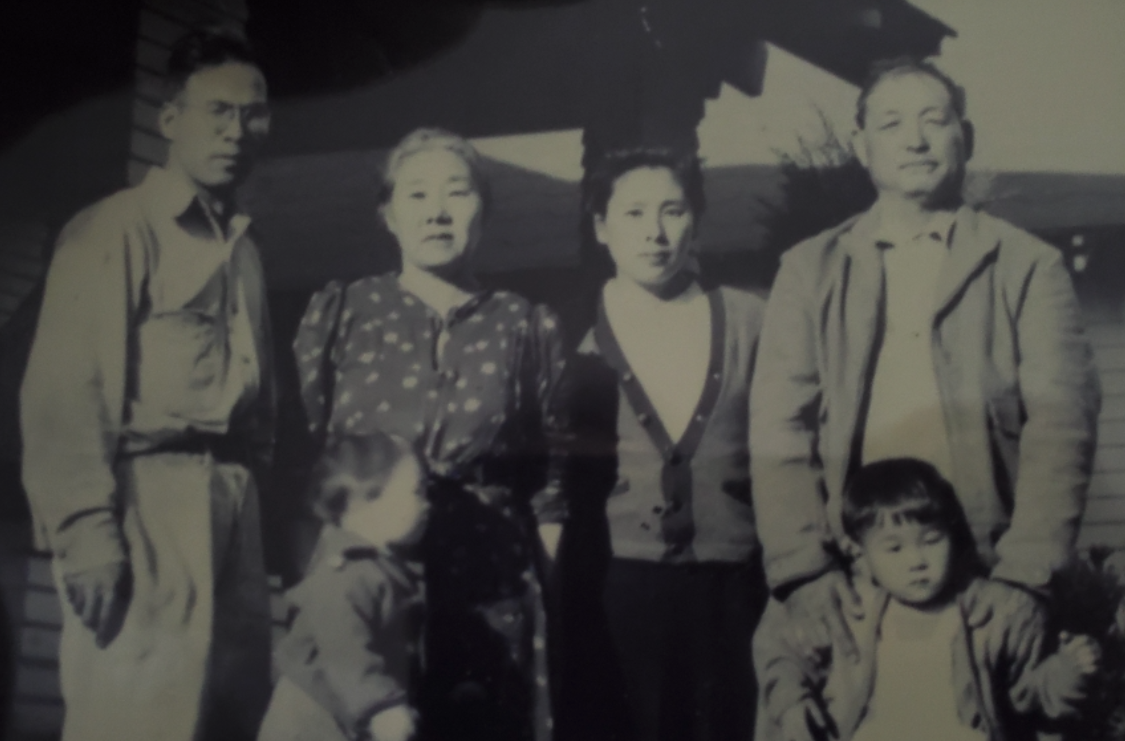
Four generations, one continuation
Every part of Akari Farms, the free tool, the fish, the greens, the small community forming around it, is a continuation of something a man named Jukichi Matsuura began more than a hundred years ago.
A farmer who crossed an ocean松浦 十吉 · 福岡県
Jukichi Matsuura was born in 1887 in a farming village in Fukuoka Prefecture, on the southern Japanese island of Kyushu. In 1905, as a young man, he left for the United States. He worked the land almost immediately: two years in an orchard near San Jose, then eight more at an orchard in Los Altos, learning California soil the way he had once learned his family's.
In 1914 he married, in San Francisco, a young woman who had made the same ocean crossing. Two years later he signed his own land lease. By the 1920s he was managing a ranch in the Central Valley. He was, by every record that survives, a farmer's farmer, someone whose life was measured in seasons and soil.
He didn't just grow. He gathered.西南庭園業組合
This is the part of his story that matters most to me, and the part I see most clearly in what I am trying to do now.
In June 1941, his own name appears in a call-notice as one of the founding members summoned to organize the Southwest Garden Industry Association, an organization of Japanese immigrant growers and gardeners in the Los Angeles area. In a country that did not always welcome them, and often actively did not, these were people building something together: sharing knowledge, pooling resources, and helping the ones who arrived after them find their footing in unfamiliar ground.
He understood that growing food was never only about your own plot. It was about the people around you, and the people who would come next. He grew, and he made it easier for others to grow.
Then · 1905
Jukichi Matsuura
- Crossed an ocean to farm unfamiliar ground
- Learned California soil season by season
- Co-founded an association to help fellow growers
- Made it easier for the ones who came after
Now · Four generations later
Anthony Tanaka
- Crossing from a software career into growing food
- Learning a new method, aquaponics, season by season
- Building a free tool and a community to help others grow
- Trying to make it easier for the ones just starting
The tools changed. He had soil and his hands and a horse-drawn plow. I have water, a greenhouse, and a laptop. But underneath, it is the same act: making living things grow, and bringing other people along with you. The Japanese have a word for this kind of continuation, keizoku. It does not mean copying what came before. It means carrying it forward.
The part I will not leave out
In 1942, during the Second World War, the United States government forcibly removed more than a hundred thousand people of Japanese descent from their homes and imprisoned them in incarceration camps. Jukichi and his family were sent to Camp Amache, in the plains of southeastern Colorado.
He never came home. Jukichi Matsuura died at Amache on February 9, 1944, of stomach cancer, at 56 years old, imprisoned by the country he had spent nearly four decades helping to feed.
I include this because it is true, and because a story that only keeps the beautiful parts is not really a story. He built a life out of soil and community, and it was taken from him. That, too, is part of what I carry.
Why "Akari"明かり · light, glow
Akari means light. A small, warm, human kind of light, the glow of a lantern, the light left on for someone coming home. I chose it because that is what I hope this work can be: a little light passed from one pair of hands to the next.
My children are the fifth generation, the Gosei. Someday the growing may pass to them, or it may not. That is theirs to decide. But the light does not depend on any one of us holding it forever. It only depends on it being passed.
Akari Farms is not a memorial. It is a continuation. The light does not go out. It passes.
If any of this resonates, the best thing you can do is grow something. We built a free tool to help you start.